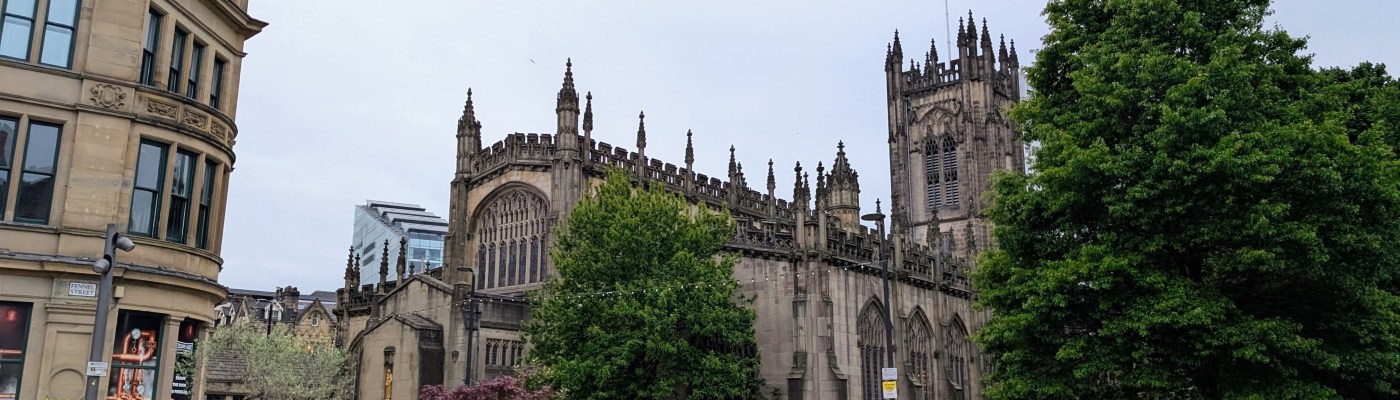
After a scenic drive through Wales from the Holyhead ferry port, I had finally arrived in Manchester after wishing for years to see the city. But this was more than just a new city to explore; it was the city where my dad was born. I was excited to walk the streets he walked and see and imagine the place that shaped his early life.
Curious about my Welsh adventure? You can read all about it here:
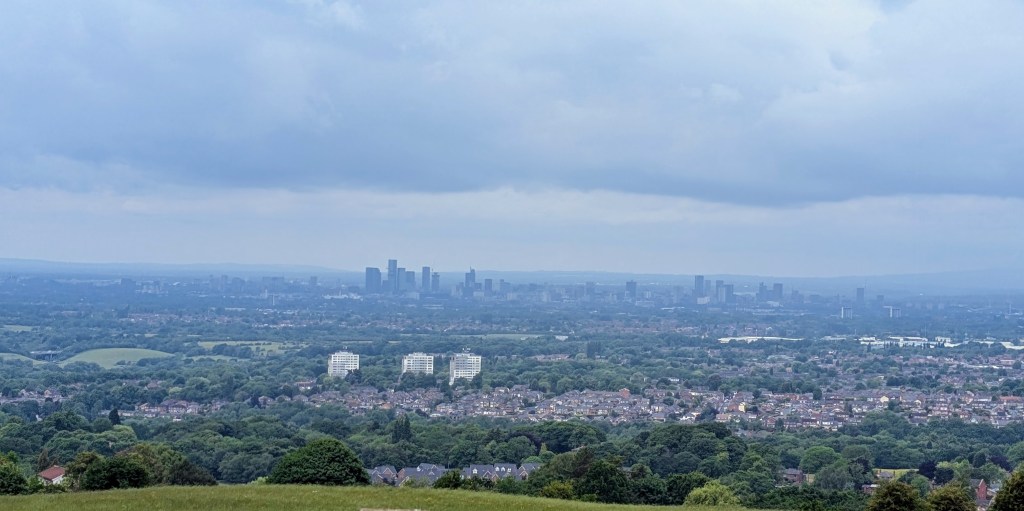
With only one afternoon and an evening to explore Manchester, I decided to do it the best way I knew how: on foot after a good meal. My first impression, walking through the city, was one of surprise at the towering skyscrapers and its impressive modern skyline. I immediately wondered if this was the Manchester my father knew growing up, but I quickly realised that wasn’t the case. He was born in 1946, and the city back then was just beginning to recover from the Second World War. These towers were a much more recent addition, mostly built from the 1960s onwards.
Manchester’s history is recognised as being the world’s first industrial city. The Industrial Revolution kicked off here in the 18th and 19th centuries and the city was transformed with towering mills and bustling warehouses. In these factories, new machinery spun imported cotton into clothes sold across the globe. But this growth had its challenges; the city became very overcrowded and polluted despite its successful industry. This was the reality long before the song “Dirty Old Town” famously captured the grit and hardworking nature of the area. It truly feels like an anthem for the city. As I was walking past a pub, I heard its patrons singing along passionately. “Dirty Old Town” has always been my favourite song, but hearing it there, in the city that inspired it, I finally understood its origin and the landmarks referenced in the songs.
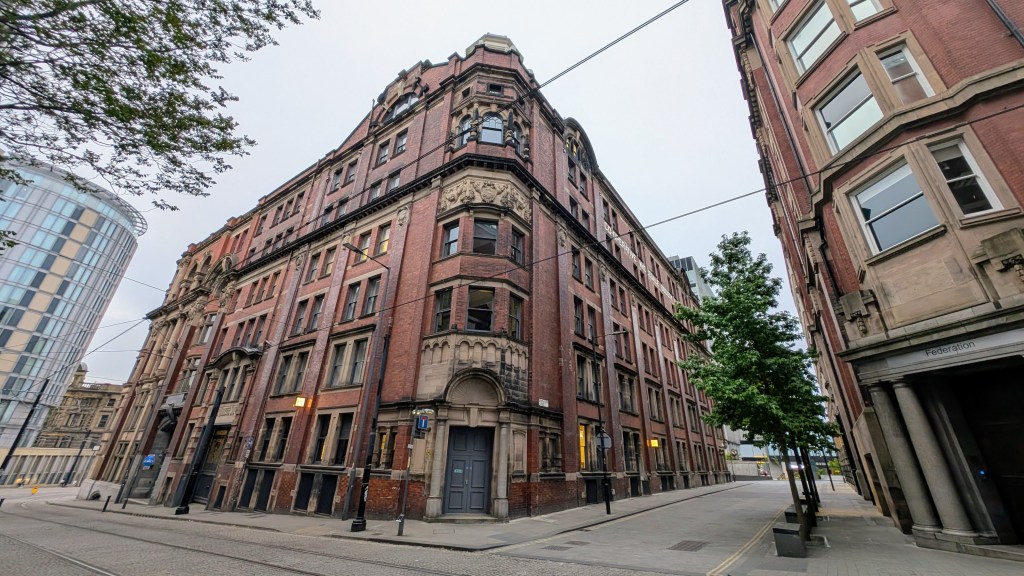
What’s so striking about Manchester is that it’s such a beautiful and clean city today, especially when you consider its industrial past. You can still feel the legacy of the Industrial Revolution and see how it shaped the city, and you don’t have to look hard to find it. It’s in the red-brick architecture that defines the city’s character, from grand warehouses in the city center to the former factory buildings of the Northern Quarter. It’s in the very layout of the city, which grew around its canals and railways. Even grabbing a coffee or a pint often means sitting inside a beautifully converted piece of industrial history.
Just outside the city I found a beautiful location to see the impressive Manchester skyline from a restaurant called The Hare & Hounds Inn.

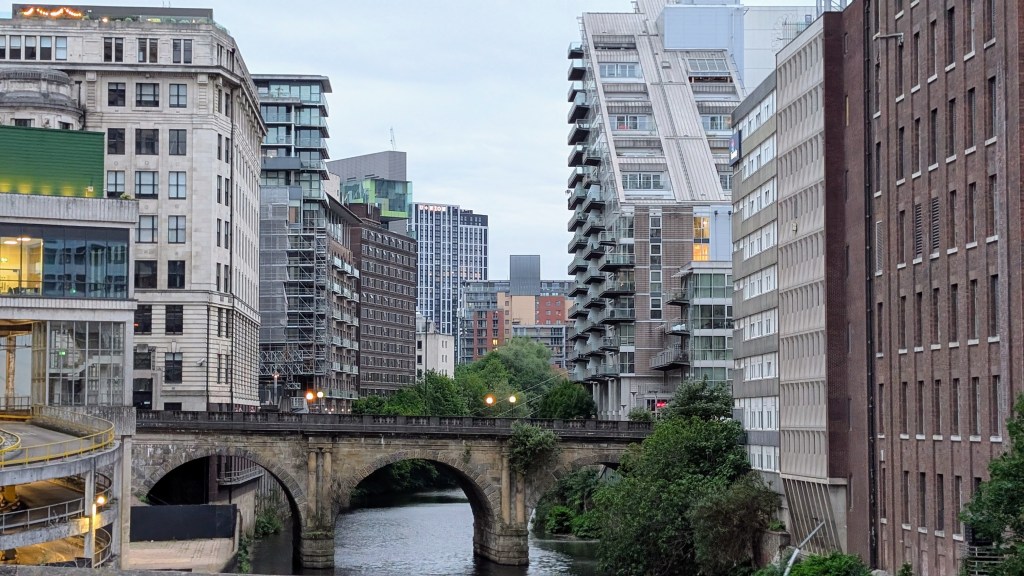
Walking through the city, I was captivated by the grand scale of the old Victorian buildings. I spent some time exploring and taking photos around areas like Federation Street, Hilton Street, and Market Street. The contrast was amazing, especially seeing the historic Victoria Bridge framed by modern glass and steel towers.


Unfortunately, I reached these attractions right at closing time, so I couldn’t go in. Still, it was great just to admire the architecture of these iconic buildings from the outside.
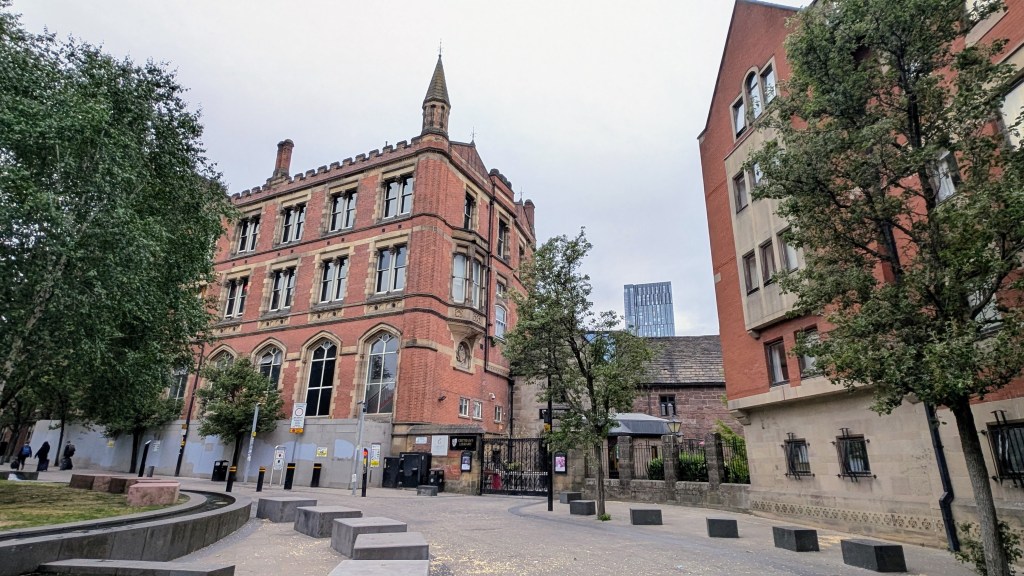
Chetham’s Library
Chetham’s Library is the oldest public library in Britain, and for the past 350 years it has been continuously used as a public library. It was originally built from 1421 using sandstone as part of the Manchester Collegiate Church to house priests. The library boasts an incredible collection of historic books in it’s medieval rooms. You can take a tour at the library to learn more about this historic building.
Manchester cathedral
Right next door to Chetham’s Library is the Manchester Cathedral: a beautiful Gothic church that has been part of the city for 600 years. The tall central tower immediately stand out among the surrounding buildings and its old stone is a complete contrast to the modern glass buildings nearby. It has a beautiful garden of flowers just outside the cathedral. The bee statue outside the Cathedral is a powerful anti-violence monument crafted from surrendered weapons from the May 2017 attack at the Manchester Arena, embodying both Manchester’s hardworking industrial past and its modern spirit of unity and defiance. The bee icon can be seen throughout Manchester’s city, including it’s Bee Network for public transport.


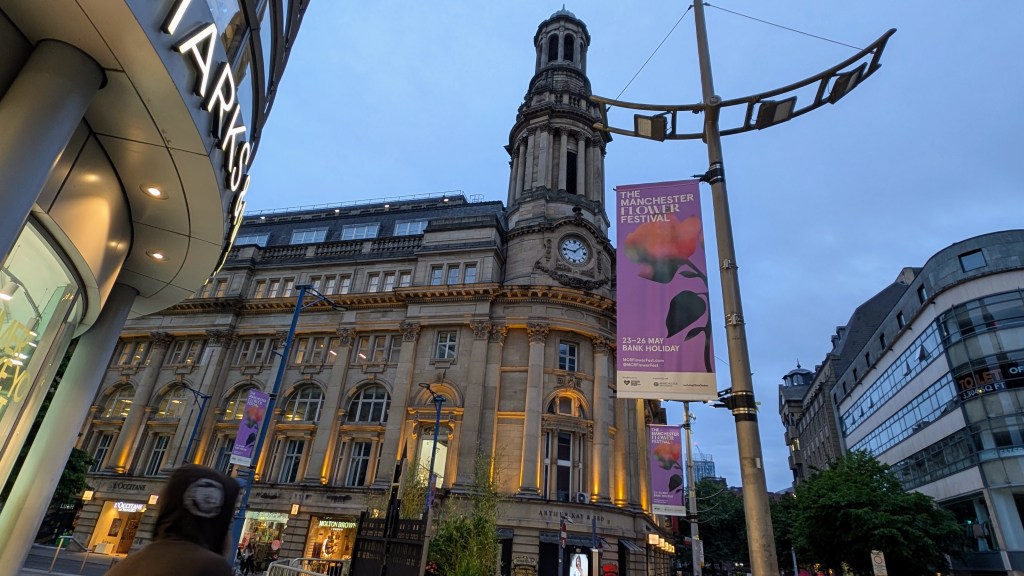
Royal Exchange Manchester
The Royal Exchange Manchester is an impressive building first built in 1809 that beautifully illustrates the city’s evolution. Its grand hall, once the bustling center of the global cotton trade, has remarkably survived two devastating bombings, one in the Second World War, and the other an IRA bomb. Today, this historic building is used as a cultural hub, and also houses the Royal Exchange Theater inside the original Victorian hall. There is also a collection of boutique shops and cafes.
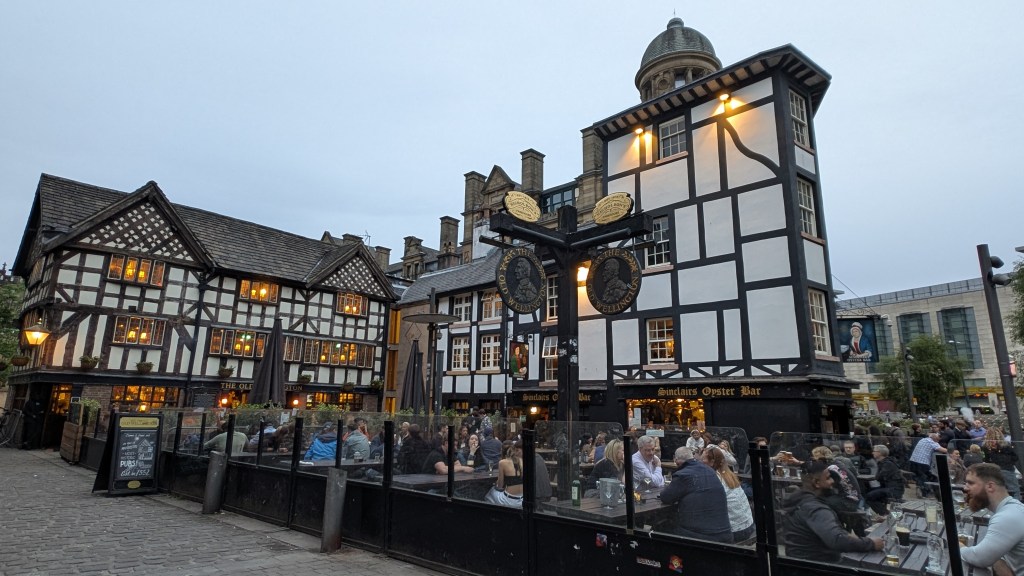
The Old Wellington
The Old Wellington isn’t just a pub. It was built in 1552 and is a living piece of history that has survived it all. It lasted through the Industrial Revolution, withstood the Manchester Blitz in the Second World War, and even survived the 1996 IRA bombing that devastated the surrounding area. Beyond that, it’s an engineering marvel, having been lifted and moved about 100 meters to allow for a new city layout after the bombing. This distinctive black-and-white, timber-framed building is a rare Tudor relic that has truly stood the test of time and hardship. It’s the perfect place to have an ale from traditional casks in a historic venue.
Though my time in Manchester was short, I walked away with more than just photos of beautiful architecture. In this interesting and resilient city, I found a surprising sense of connection. Standing in the place where my father’s story began, surrounded by the echoes of its industrial past and the energy of its vibrant present, I can honestly say I felt a part of it too.
 Shells Adventures